I should also note that I'm not disagreeing with hunting deers-I mean I could not do it myself personally, but I recognize humans were hunters among many things through out evolutionary development- In fact I would go as far to point out,hunting deer compared to industrial (American)cattle farm operations- I mean, its hard to sure putting the cattle out of their misery vs. taking a animal making its living in the wild- its a tough one- Honestly, I have to reflect long,hard, and often on this bizarre juxtaposition of culture within our developed society (here in America).
Wednesday, January 4, 2012
Duck, Duck,-Goose-Kite?!!
I should also note that I'm not disagreeing with hunting deers-I mean I could not do it myself personally, but I recognize humans were hunters among many things through out evolutionary development- In fact I would go as far to point out,hunting deer compared to industrial (American)cattle farm operations- I mean, its hard to sure putting the cattle out of their misery vs. taking a animal making its living in the wild- its a tough one- Honestly, I have to reflect long,hard, and often on this bizarre juxtaposition of culture within our developed society (here in America).


Tuesday, January 3, 2012
Fracking Show Down
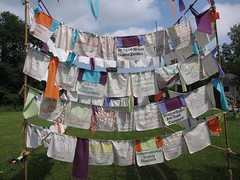 Image by Bosc d'Anjou via Flickr
"Over winter break, the big local news stories just kept on a-comin' in little old Athens. If you left town and didn't follow The Athens NEWS online, here's a quick update on what you may have missed.
Frack, frack, frack
Undoubtedly the biggest continuing story over break was the accelerating rush by oil-and-gas operators to lease up land in Athens County for possible drilling. This leasing boom, which started in New York and Pennsylvania, spread to the eastern counties of Ohio in late 2010, and got to Athens County this past fall.
It's based on the presence of the deep underground Marcellus and Utica shale formations, which underlie much of the eastern United States, and contain large quantities of oil and natural gas. It has recently become profitable to harvest these petrochemicals by combining existing technology – hydraulic fracturing and horizontal drilling. Since shale layers are relatively narrow vertically, but run for many miles horizontally, the ability to employ horizontal hydraulic fracturing has revolutionized the oil and gas industry, both in this country and
Any drilling in Athens County would probably be into the deeper Utica shale; the Marcellus doesn't come very far into the county.
The new "fracking" method involves drilling thousands of feet down into a shale bed, then drilling out sideways in multiple directions. Once the drilling is complete, the operator pumps pressurized water, sand and chemicals underground to break up the shale, and bring the oil and/or gas to the surface.
The possibility that Athens County may be part of the anticipated boom in drilling has sparked wildly different responses among local residents. It's got many local landowners lining up to sign potentially big-money leases – mainly with a West Virginia company called Cunningham Energy – and environmentalists raising a great hue and cry about the potential for fracking to pollute water supplies and ruin the rural lifestyle. And recently, the threat of small earthquakes resulting from deep injection wells used to store fracking wastewater has become a reality in Northeast Ohio.
The same debate is occurring just about anywhere where fracking is being used, and some states and nationals have enacted strict limits or moratoriums on the practice."
Frack, frack, frack
Undoubtedly the biggest continuing story over break was the accelerating rush by oil-and-gas operators to lease up land in Athens County for possible drilling. This leasing boom, which started in New York and Pennsylvania, spread to the eastern counties of Ohio in late 2010, and got to Athens County this past fall.
It's based on the presence of the deep underground Marcellus and Utica shale formations, which underlie much of the eastern United States, and contain large quantities of oil and natural gas. It has recently become profitable to harvest these petrochemicals by combining existing technology – hydraulic fracturing and horizontal drilling. Since shale layers are relatively narrow vertically, but run for many miles horizontally, the ability to employ horizontal hydraulic fracturing has revolutionized the oil and gas industry, both in this country and
Any drilling in Athens County would probably be into the deeper Utica shale; the Marcellus doesn't come very far into the county.
The new "fracking" method involves drilling thousands of feet down into a shale bed, then drilling out sideways in multiple directions. Once the drilling is complete, the operator pumps pressurized water, sand and chemicals underground to break up the shale, and bring the oil and/or gas to the surface.
The possibility that Athens County may be part of the anticipated boom in drilling has sparked wildly different responses among local residents. It's got many local landowners lining up to sign potentially big-money leases – mainly with a West Virginia company called Cunningham Energy – and environmentalists raising a great hue and cry about the potential for fracking to pollute water supplies and ruin the rural lifestyle. And recently, the threat of small earthquakes resulting from deep injection wells used to store fracking wastewater has become a reality in Northeast Ohio.
The same debate is occurring just about anywhere where fracking is being used, and some states and nationals have enacted strict limits or moratoriums on the practice."

Colorado Rules to close FRACKING chemical Loophole!
"First, the good: A few weeks ago, the State of Colorado passed the strongest rules in the United States for publicly disclosing what cancer-causing and other types chemicals are used in oil and gas fracking. In a ground-breaking and intense set of negotiations between oil and gas companies and environmentalists, frackers are now forced to publicly disclose when they are fracking and what chemicals they use in fracking.
This disclosure gets at two very serious concerns posed by fracking: 1) when fracking pollution occurs in groundwater, in streams, or on land, the public should be able to connect that pollution back to the fracking chemicals that caused it, and 2) it will allow landowners to test their wells and groundwater prior to fracking, and then re-test after fracking to check for fracking pollution.
Importantly, the new rules substantively removed the "trade secret loophole" that was proposed in the original version of the rules that would have allowed frackers to not disclose the names of the chemicals in fracking fluids by saying those chemicals were "trade secrets." Led by attorneys from Earthjustice in Denver, the environmental community held its ground against this ridiculous exemption.
This disclosure gets at two very serious concerns posed by fracking: 1) when fracking pollution occurs in groundwater, in streams, or on land, the public should be able to connect that pollution back to the fracking chemicals that caused it, and 2) it will allow landowners to test their wells and groundwater prior to fracking, and then re-test after fracking to check for fracking pollution.
Importantly, the new rules substantively removed the "trade secret loophole" that was proposed in the original version of the rules that would have allowed frackers to not disclose the names of the chemicals in fracking fluids by saying those chemicals were "trade secrets." Led by attorneys from Earthjustice in Denver, the environmental community held its ground against this ridiculous exemption.
Subscribe to:
Posts (Atom)